Vositone Smartwatch Sourcing Practical Guide 2026
Smartwatch sourcing requires structured supplier vetting, sample validation, factory audit, price negotiation and four-stage quality control to avoid scams and ensure on-time delivery. This complete 2026 practical guide covers every step from RFQ to shipment, from Vositone, a Shenzhen-based 16-year wearable OEM factory with 70+ R&D engineers and 0.3% defect rate. Unfortunately, many first-time buyers skip critical verification steps and end up with defective products, delayed shipments or lost deposits. For this reason, following a disciplined sourcing process is the single most important factor for profitable OEM smartwatch projects.
- Smartwatch Sourcing Roadmap Overview
- How to Identify Reliable Smartwatch Suppliers
- Initial Inquiry and RFQ Best Practices
- Sample Evaluation Protocol
- Factory Audit Checklist
- Price Negotiation Strategies
- Quality Control During Mass Production
- Logistics and Shipping Options
- Payment Terms and Risk Management
- Vositone One-Stop Sourcing Advantage
- Frequently Asked Questions
- Start Your Smartwatch Sourcing Project
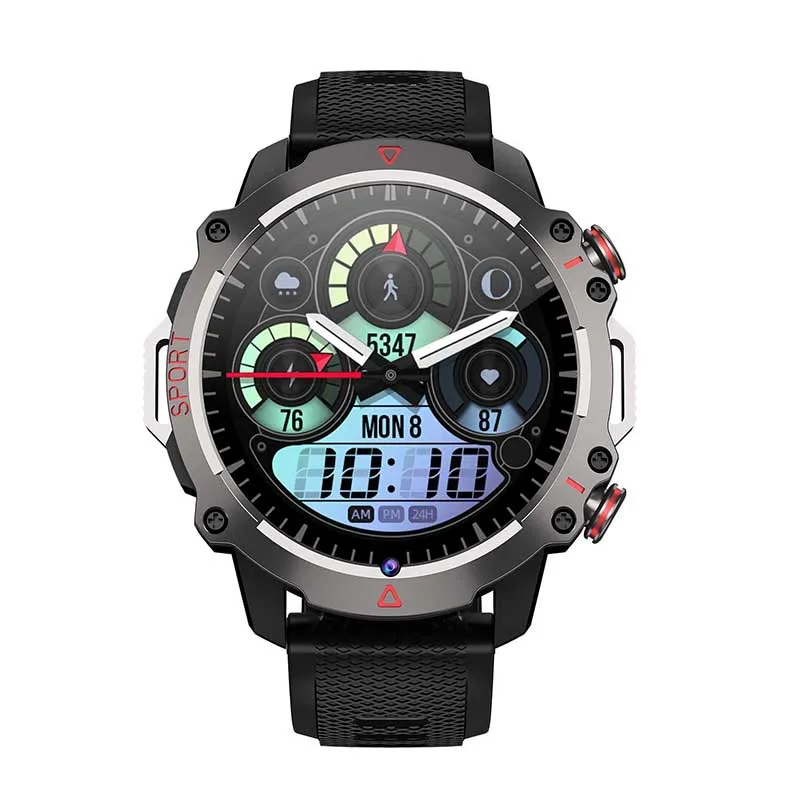
Smartwatch Sourcing Roadmap Overview
In practice, professional smartwatch sourcing follows a seven-stage workflow. More importantly, each stage has clear verification gates before advancing to the next.
| Stage | Key Actions | Duration | Deliverable |
|---|---|---|---|
| Market research | Define spec, target market, budget | 1-2 weeks | Product requirement document |
| Supplier identification | Source and shortlist 5-8 suppliers | 1-2 weeks | Shortlist with qualification |
| Initial inquiry | Send RFQ, collect quotations | 1-2 weeks | Quotation comparison table |
| Sample evaluation | Order and test 3-5 samples | 2-4 weeks | Sample evaluation scorecard |
| Factory audit | On-site or video audit | 1 week | Audit report with pass/fail |
| Negotiation | Price, MOQ, terms, contract | 1-2 weeks | Signed purchase agreement |
| Production and shipment | Mass production, QC, logistics | 30-55 days | Delivered finished goods |
How to Identify Reliable Smartwatch Suppliers
Sourcing Channels
- B2B platforms: Alibaba, Global Sources, Made-in-China
- Trade shows: HKTDC Electronics Fair, CES, IFA, Gitex
- Industry referrals and buyer communities
- Direct factory outreach via company websites and LinkedIn
Supplier Qualification Checklist
First of all, verify before requesting samples:
- Valid business license with manufacturing scope
- ISO 9001 quality management certification
- Export experience to your target market
- Verified client references in wearable category
- Physical factory address (not just a trading office)
- Willingness to conduct video factory tour
Red Flags To Avoid
For example, a company claims to be a factory but cannot show production line photos or video. Other red flags include:
- Quoted price is 30%+ below all other suppliers (likely hidden costs or quality cutting)
- Refuses to provide business license or certification documents
- No physical address listed, only a mobile phone number
- Inconsistent company name across website, email and platform profile
- Pressures you to pay full amount upfront without contract
Additionally, for understanding cooperation modes before sourcing, see our White Label vs Private Label Smart Wearable guide.
Initial Inquiry and RFQ Best Practices
Standard RFQ Template
Notably, a well-structured RFQ gets professional responses. Include these fields:
- Product specification: display type, sensor list, connectivity, battery target
- Target quantity: first batch and estimated annual volume
- Target market: countries for certification requirements
- Certification needed: CE, FCC, RoHS, FDA, etc.
- Packaging requirements: retail box, manual, accessories
- Delivery timeline: expected sample and mass production dates
- Customization scope: logo, UI, firmware, housing color
Inquiry Writing Tips
Specifically, be specific about quantity tiers (300, 1000, 5000 pcs). Likewise, mention your target market so supplier can quote correct certification. Furthermore, ask for itemized cost breakdown, not just unit price. Also request sample fee policy and lead time upfront. Finally, ask about MOQ for both first order and repeat orders.
Common Inquiry Mistakes
For instance, vague requests like "send me your best price" get generic low-quality quotes. Similarly, only comparing unit price without considering MOQ, tooling and certification fees leads to wrong decisions. Meanwhile, omitting target market leads to wrong certification assumptions. Finally, sending the same copy-paste inquiry to 20 suppliers without personalization reduces response quality.
Download Smartwatch Sourcing Checklist (PDF) with RFQ template and supplier scorecard.
Sample Evaluation Protocol
What To Test On Every Sample
Starting with hardware build quality: housing finish, button feel, strap durability. Then display: brightness, color accuracy, touch responsiveness. Next sensors: heart rate accuracy, SpO2, step counting consistency. Also battery life: actual runtime under normal usage vs claimed spec. Furthermore firmware: stability, UI smoothness, Bluetooth connection reliability. Additionally waterproof: verify IP rating with immersion or pressure test. Finally packaging: print quality, accessory completeness, manual accuracy.
Sample Evaluation Scorecard
Next, rate each dimension 1-10, weighted by importance:
| Dimension | Weight | Test Method |
|---|---|---|
| Build quality | 20% | Visual inspection, drop test |
| Sensor accuracy | 20% | Compare with medical reference device |
| Battery life | 15% | 7-day real usage test |
| Firmware stability | 15% | 48-hour stress test |
| Display quality | 10% | Brightness, color, outdoor visibility |
| Waterproof | 10% | IP rating verification |
| Packaging | 5% | Unboxing experience |
| Documentation | 5% | Manual, compliance docs |
Sample Order Recommendations
As a rule of thumb, order 3-5 units from each shortlisted supplier (2-3 suppliers). Crucially, test all units, not just one - consistency matters. In addition, keep one sample unopened as golden reference for mass production. Finally, negotiate sample fee deduction from future mass order.
Factory Audit Checklist
Production Capability
Beginning with SMT line: number of lines, pick-and-place machine brands, AOI equipment. Then assembly line: number of stations, workers per line, daily output. Also QC lab: testing equipment, aging racks, waterproof test chamber. Finally warehouse: component storage, finished goods area, inventory system.
Document Verification
First, ISO 9001 certificate (valid, not expired). Then CE, FCC, RoHS test reports for similar products. Also business license with manufacturing scope. Furthermore export customs records (if available). Finally current order load and available production capacity.
Social and Environmental Compliance
Regarding social compliance, worker conditions: working hours, overtime policy, safety equipment. Also environmental: wastewater handling, RoHS compliance for materials. Additionally fire safety: extinguishers, exit routes, emergency drills. Finally employee turnover rate (high turnover indicates management issues).
Audit Methods
Depending on order size, on-site audit is best for high-volume orders (5000+ pcs). Alternatively, video audit via live factory tour works well for medium orders. Also third-party audit report from SGS, Bureau Veritas or Intertek provides independent verification. Finally reference call with existing clients (ask supplier for contacts).
Moreover, for manufacturing process details to understand what you are auditing, see our Smart Watch Manufacturing Process guide.
Price Negotiation Strategies
Understand Factory Cost Structure
Above all, before negotiating, understand what drives the price:
- BOM (Bill of Materials): 60-70% of unit cost
- Labor and assembly: 10-15%
- Overhead and factory margin: 10-15%
- Tooling and NRE: one-time, amortized over batch
Effective Negotiation Levers
Most effectively, volume commitment unlocks lower unit price. In addition, annual framework agreement commits to yearly total for better pricing. Also, payment terms with larger deposit may earn price discount. Similarly, lead time flexibility means non-rush orders cost less than expedited production. Finally, component selection: ask for alternative component options to reduce cost.
What Is Negotiable vs Non-Negotiable
| Item | Negotiable? | Notes |
|---|---|---|
| Unit price | Yes | Volume-dependent |
| MOQ | Sometimes | May require NRE fee for lower MOQ |
| Lead time | Sometimes | Rush orders incur premium |
| Payment terms | Yes | 30/70 is standard, can negotiate |
| Certification cost | Sometimes | May be shared for long-term partners |
| Tooling cost | No | Fixed engineering expense |
Pricing Red Flags
For example, a quote 30%+ below market average likely indicates quality cutting or hidden fees. Likewise, refusal to provide itemized cost breakdown is a warning. Also low unit price but exorbitant tooling or NRE fees should raise concern. Furthermore, price changing drastically between inquiry and sample stage is suspicious. Finally, no written quotation, only verbal price, is unacceptable.
Quality Control During Mass Production
Pre-Production Inspection (PPI)
First, approve golden sample before production starts. Then verify first article (first 5-10 units off production line). Also confirm component batch matches approved BOM. Finally sign off on production standard document.
During Production Inspection (DPI)
At the midpoint, conduct mid-production check when 20-30% complete. Then verify assembly process follows SOP. Also check defect rate on production line (should be below 2%). Finally identify and correct issues early before full batch affected.
Final Random Inspection (FRI)
Specifically, use AQL sampling standard (typically AQL 0.65 for major defects, 1.0 for minor). Then inspect when 100% complete and 80%+ packaged. Also test function, appearance, packaging and documentation. Finally inspection result: Pass / Fail / Re-inspect after rework.
Third-Party Inspection Services
Common providers include SGS, Bureau Veritas, Intertek, TUV Rheinland. In terms of cost, typically $200-400 per man-day. Generally recommended for orders above $10,000 value. Finally, request inspection report with photos before releasing balance payment.
Defect Handling Protocol
Regarding defects, major defects (functional failure) require rework or replacement. By contrast, minor cosmetic defects are acceptable within AQL limits. Also batch failure rate above 5% means reject entire batch, require rework. Finally document all defects with photos for supplier accountability.
Additionally, for certification requirements that intersect with QC, see our Smart Watch Certification Guide 2026.
Logistics and Shipping Options
Shipping Method Comparison
| Method | Transit Time | Cost Level | Best For |
|---|---|---|---|
| Express (DHL/FedEx/UPS) | 3-7 days | High | Samples, small urgent orders |
| Air freight | 5-10 days | Medium-High | Medium orders, time-sensitive |
| Sea freight LCL | 25-40 days | Low-Medium | Medium orders not time-sensitive |
| Sea freight FCL | 25-40 days | Lowest | Large orders (full container) |
| Rail freight (China-EU) | 18-25 days | Medium | European orders, balance of cost/time |
Incoterms for Smartwatch Orders
Starting with EXW (Ex Works): buyer arranges all shipping from factory gate, lowest product price but highest logistics complexity. Next, FOB (Free On Board): factory delivers to port, buyer handles ocean freight and insurance, most common for OEM orders. Then CIF (Cost Insurance Freight): factory arranges shipping and insurance to destination port, buyer handles customs clearance. Finally, DDP (Delivered Duty Paid): factory handles everything including customs duty and delivery to your door, highest convenience and highest cost.
Amazon FBA Preparation
Regarding FBA, FNSKU labeling on each unit (factory can apply). Also carton requirements: max 25kg, standard six-sided box. Furthermore palletization if shipping LTL to FBA warehouse. Also include commercial invoice, packing list and bill of lading. Finally verify HS code for smart watches (typically 9102.12 or 8517.62).
For reference, for AQL and quality inspection standards, refer to the International Organization for Standardization sampling guidelines.
Payment Terms and Risk Management
Common Payment Structures
Most common is 30% deposit + 70% balance before shipment, standard OEM practice. A safer option is 30% deposit + 70% balance against B/L copy, better for buyer and common for sea freight. Also L/C (Letter of Credit) is bank-guaranteed, used for large orders ($50,000+). Furthermore PayPal or credit card only for samples and small orders under $1000. Finally escrow or trade assurance is platform-protected payment, good for first-time orders.
Deposit Protection
Above all, never pay 100% upfront for first order with new supplier. Furthermore, use platform trade assurance (Alibaba) for first transaction. Also verify bank account matches company name on business license. Additionally get signed proforma invoice before any payment. Finally consider third-party escrow for high-value first orders.
IP Protection
First and foremost, sign NDA before sharing product concept and design files. Additionally, register trademark in target market before production. Also apply for design patent if custom housing. Furthermore ensure contract specifies IP ownership of custom firmware and tooling. Finally request factory to destroy unused custom components after order.
Common Sourcing Scams
Common scams include fake factory, where a trading company poses as manufacturer and inflates prices. Another frequent scam is bait and switch, where sample quality is good but mass production quality is poor. Also deposit theft, where supplier disappears after receiving deposit. Furthermore counterfeit components, where fake chips or sensors are installed to cut cost. Finally shipping fraud, where supplier sends empty boxes or wrong products after balance payment.
Vositone One-Stop Sourcing Advantage
With that in mind, as a Shenzhen-based wearable ODM/OEM manufacturer with 16-year industry experience, 70+ hardware and firmware R&D engineers, 10000 square meter factory and 300+ production staff, Vositone provides transparent, one-stop smartwatch sourcing service.
| Capability | Specification |
|---|---|
| Factory area | 10,000 square meters |
| R&D engineers | 70+ |
| Monthly capacity | 50,000+ units (peak 80,000) |
| Mass production defect rate | 0.3% or below |
| Standard MOQ | 300 pcs (white label), 500+ (private label) |
| Sample lead time | 10-15 days (7-day rush available) |
| Mass production lead time | 30-55 days |
| Certifications | CE, FCC, GCC, RoHS, ISO 9001 |
| Payment terms | 30% deposit, 70% before shipment |
| Sourcing support | Dedicated sourcing advisor, full transparency |
Overall, our end-to-end service covers every stage described in this guide. Learn more at our ODM and OEM Custom Wearable Solutions page.
Frequently Asked Questions
Q1: How do I find a reliable smartwatch OEM factory?
A1: To begin with, start with B2B platforms like Alibaba and Global Sources, attend trade shows like HKTDC and CES, and ask for referrals. Then verify business license, ISO certification, factory address and client references. Finally always conduct a video or on-site factory audit before placing large orders.
Q2: What should I include in my RFQ to get accurate quotes?
A2: Essentially, include product specification (display, sensors, connectivity, battery), target quantity tiers (300/1000/5000), target market for certification, packaging requirements, customization scope and expected timeline. The more specific your RFQ, the more accurate the quotation.
Q3: How many samples should I order before mass production?
A3: As a best practice, order 3-5 units from each of 2-3 shortlisted suppliers. Then test all units for build quality, sensor accuracy, battery life and firmware stability. Finally keep one unit as golden reference sample for mass production comparison.
Q4: What is AQL and why does it matter for QC?
A4: Put simply, AQL (Acceptable Quality Limit) is an international sampling standard that defines how many units to inspect and what defect rate is acceptable. For smartwatches, typically AQL 0.65 for major defects and 1.0 for minor defects. It ensures consistent quality without inspecting every single unit.
Q5: Which shipping method is best for smartwatch orders?
A5: Generally, use express (DHL/FedEx) for samples and urgent small orders. For medium orders, air freight balances speed and cost. For large orders above 5000 units, sea freight FCL offers the lowest cost. Amazon FBA sellers often use sea freight with FBA prep services.
Q6: How can I protect my deposit when working with a new supplier?
A6: Most importantly, never pay 100% upfront. Then use 30% deposit standard, verify the factory bank account matches the business license, use platform trade assurance for first orders, and get a signed proforma invoice before any payment. Finally consider third-party escrow for orders above $10,000.
Start Your Smartwatch Sourcing Project
Finally, if you are ready to start your smartwatch sourcing project, share your product specification, target quantity and timeline. Our dedicated sourcing advisor will provide a transparent quotation, arrange samples and guide you through every stage from RFQ to shipment.
Start your smartwatch sourcing project with Vositone today.


Copyright © 2026 Vositone Tech. All rights reserved. | Premium Smart Watch Manufacturer | Health Content Disclaimer | Privacy Policy | Terms of Service | SiteMap
Vositone® - Professional smart watch and smart band OEM/ODM manufacturer. CE, FCC, RoHS, IP68 Rating.


